01. Voice profiles
Posts that sound like the founder. Or the engineer. Or the company.
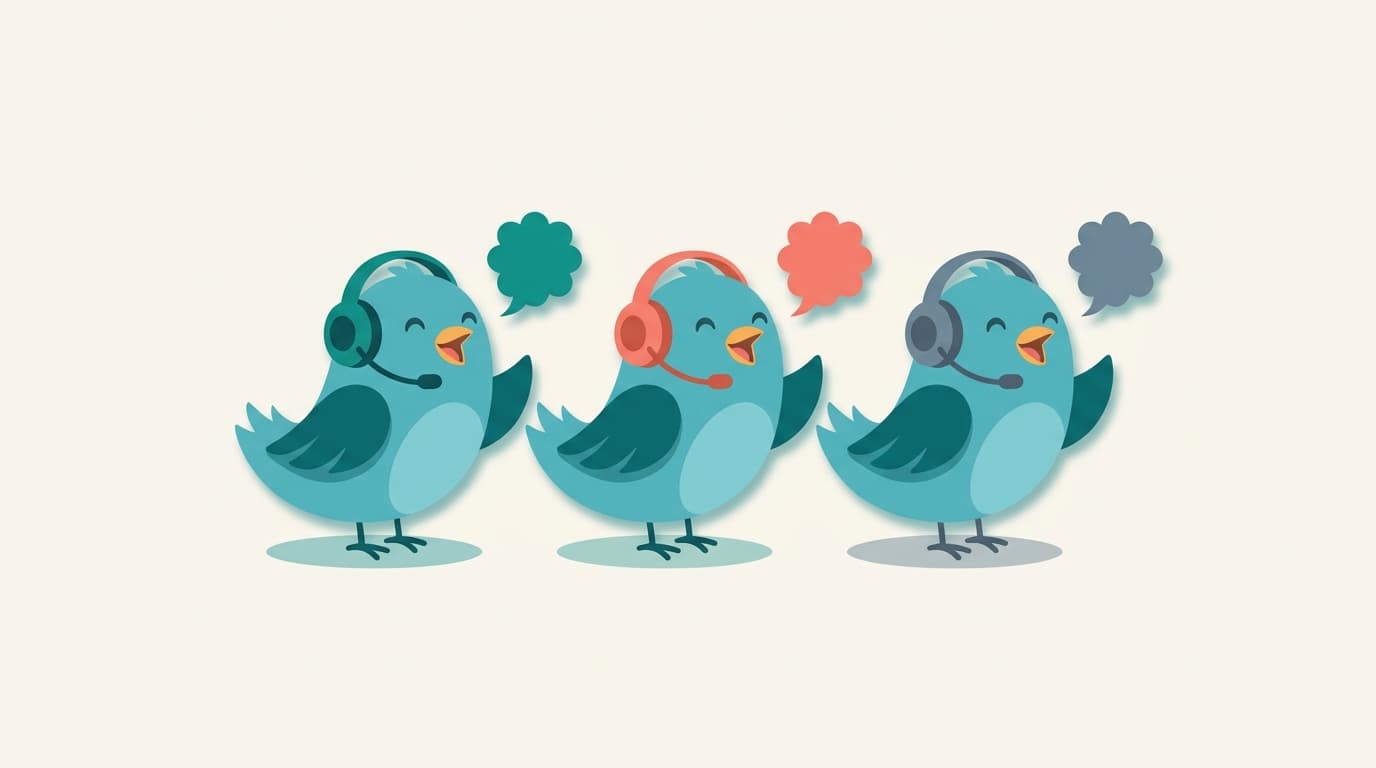
The reason most AI-drafted posts read like AI is that the model has no idea who the post is supposed to sound like. Squawk solves that with voice profiles. Each profile captures tone, recurring topics, sample posts, and explicit anti-patterns. Drafts pull from that profile so the post reads like a person, not a brand template.
What it does
The capabilities, one at a time.
Tone, topics, examples, anti-patterns
Each profile captures how the person actually writes (tone), what they care about (topics), how good output looks (examples), and what to avoid (anti-patterns).
Profiles per teammate and per brand
Multiple profiles in one workspace. The company can have its own voice. Each teammate can have their own. Drafts pick the right one for the channel and account.
Sample-driven calibration
Paste in a few real posts the person has already written. The profile uses them as anchors so drafts converge on their actual cadence.
Profile gets sharper over time
When you edit or reject a draft, Squawk records the change as a signal. Later drafts incorporate it. The profile improves as you use it.
Why it matters
The reason this exists.
Posts that come from real people outperform posts that come from a brand handle. The hard part is doing that at scale: each person needs their own voice, their own approval flow, their own connected accounts.
Squawk's voice profiles are the layer that makes multi-author content feel like a small army of distinct voices instead of one corporate megaphone with different headshots on top.
Related features
Pairs well with.
08. AI drafting engine
Drafts that read like the person, not the model
The drafting engine pulls voice profile, library items, channel format, and campaign context together. Drafts read like a real person, not generic AI.
Read more09. Team & roles
Multiple people, multiple voices, one workspace
Add teammates, assign roles, give each person a voice profile and a connected channel. Approval flows route to the right person automatically.
Read more04. Approval workflow
Approvals that don't take three Slack threads
Drafts move through clear states: needs review, approved, scheduled, published. Reviews route to the right person. Audit trail is automatic.
Read more