How AI does your post sound?
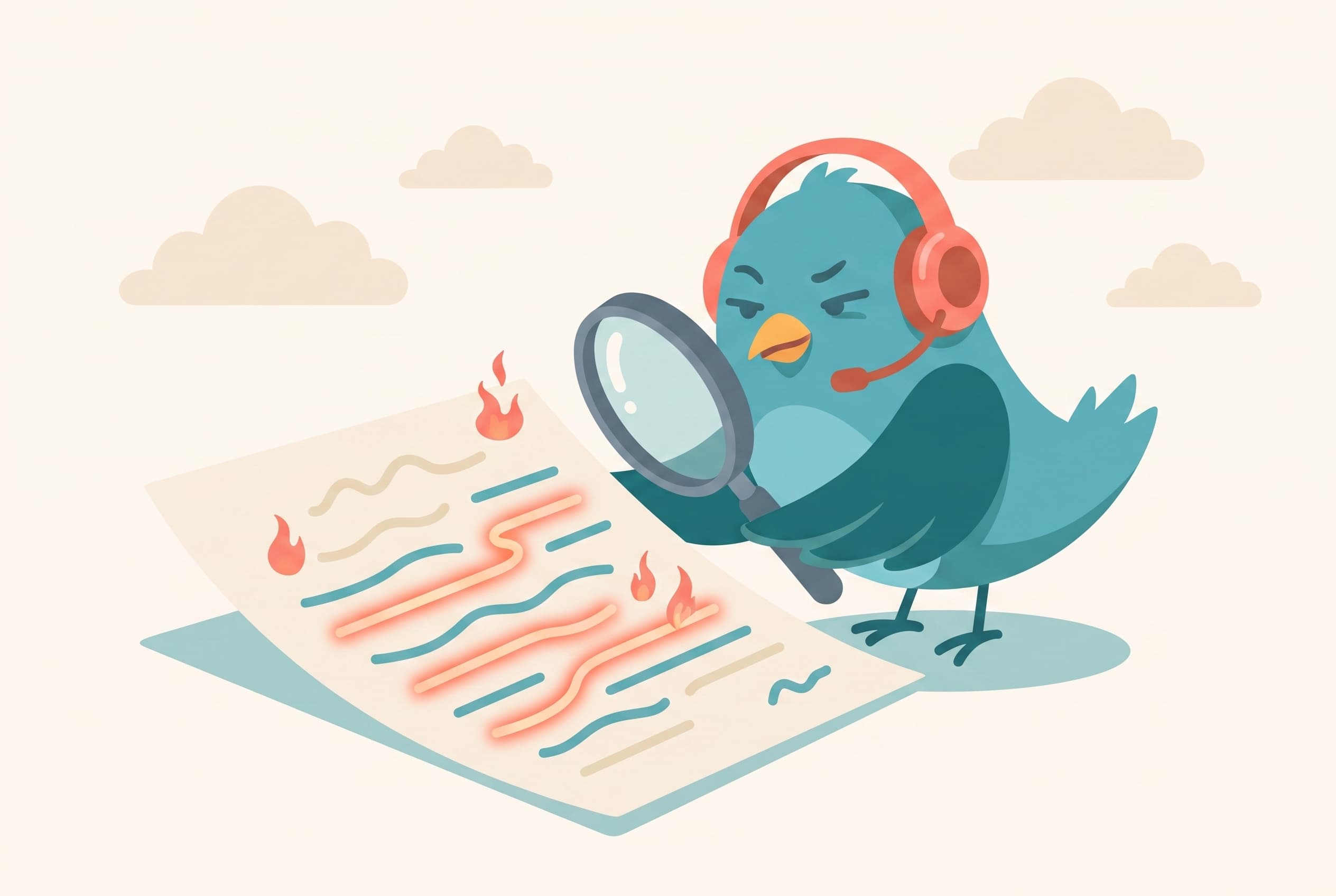
Paste a LinkedIn draft. Squawk's red team reads it the way your audience does: spotting the cadence tells, the corporate filler, and the phrases that give the game away. You get a score and a line-by-line roast. Free, no signup.
At least 20 characters.
Submitted drafts and their critiques may be reviewed by the Squawk team to improve the accuracy of the critique engine. They are never published, shared, or used in marketing.
What it checks
Cadence tells
Relentless one-liners, the "It's not X, it's Y" construction, and rule-of-three endings.
Corporate filler phrases
The stock marketing tokens that mark a post as machine-written.
Em dashes
The single most reliable AI tell in the wild right now.
Emoji density
A rocket at the end of a sentence is doing no one any favors.
Links in the post body
LinkedIn buries posts with body links; they belong in the first comment.
Openers that shame the reader
The person you just called out is the person you wanted to win over.
Claims that undercut themselves
A post that contradicts its own thesis two paragraphs later.
Spotting machine writing is Squawk's home turf. The team behind it spends its days studying what makes a post sound like a person: the rhythm, the specifics, the opinions that cost something. That judgment is the critique engine inside Squawk, where it checks every draft against your own voice profile and your real source material before a human ever reviews it. This page is the public slice.
Join the closed beta